Cameroon Civil
Aviation Authority

Centre de presse

CCAA: Harmonization of operating manuals for secondary airports

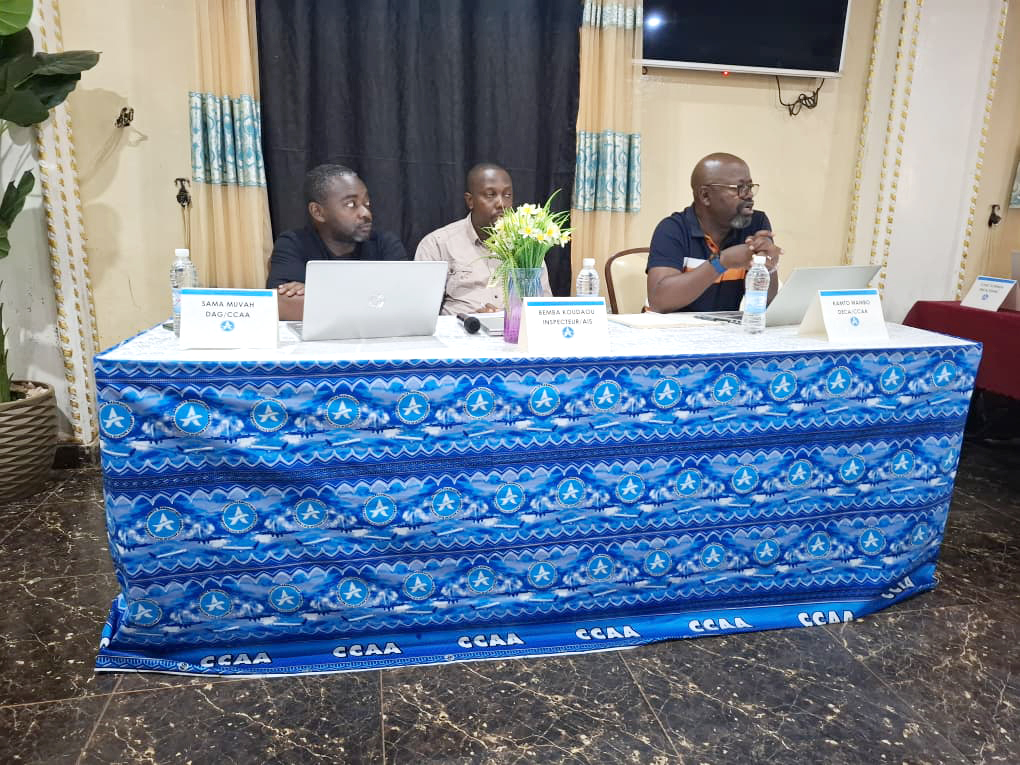
A seminar dedicated to updating and harmonizing the Operating Manuals (MANEX) of the country’s secondary airport platforms was held from 1 to 5 June 2026 in the city of Ngaoundéré. The work aimed to align the infrastructures of Ngaoundéré, Maroua-Salak, Bafoussam, and Bamenda with the most rigorous safety standards.

Led by the Directorate of Airport Operations and Commands (DECA), the seminar actively involved the Airspace Monitoring and Security Crisis Management Unit as well as the Directorate of General Administration. The synergy among participants concretely reflects the strategic orientations of the Director General of the CCAA, whose overriding priority remains aligning the safety of Cameroon’s skies with the highest international standards.

The main innovation of this 2026 edition lies in its methodological approach. It marked a departure from purely theoretical paper-based examinations. In line with the directives of the General Directorate, the validation of documentary compliance was directly tested in the field through practical simulations at Ngaoundéré Airport, under the supervision of Aviation Safety Inspectors. This operational immersion enabled Airport Commanders, air traffic controllers, AIM staff, maintenance technicians, meteorological observers, and aerodrome firefighters to confront the implementation of their procedures on site with national regulatory requirements.

Through this compliance exercise, the CCAA reassures the entire ecosystem. Airlines such as Camair-Co are guaranteed to encounter the same rigour in Ngaoundéré or Maroua as in Yaoundé and Douala. For ground teams, this harmonization strengthens coordination and the sharing of best practices across platforms. The workshop also eliminated technical discrepancies, notably through the meticulous updating of the following five regulatory pillars of the MANEX:


  • Rescue and Firefighting: Work focused on optimizing response times of rescue personnel and ensuring technical compliance of intervention vehicles. The workshop also consolidated the culture of feedback, developed inter-service synergies, and enhanced technical mastery of teams in line with regulatory requirements, particularly regarding daily maintenance of intervention vehicles.
  • Maintenance of Radio-Electric Infrastructure: In aeronautical telecommunications, discussions addressed optimal implementation of operational recording procedures, interface contracts with other units, and methodological divergences in measuring electrical grounds of radio installations. Securing radio communication systems and navigation aids was a key priority to guarantee continuity of air-to-ground links.
  • Air Traffic Management: Efforts centered on strengthening the management of LOAs (Letters of Agreement), streamlining interface contracts, and harmonizing the preservation and archiving of flight progress strips.
  • Aeronautical Meteorology: Measures were taken to reinforce methodologies for estimating meteorological data in case of equipment failure, and to ensure reliable protocols for collecting and transmitting regional meteorological data to the centralization centre in Douala.
  • Aeronautical Information Management: Participants focused on strengthening the monitoring and processing of AIP, NOTAM, SUPP, and AIC publications, implementing interface contracts with other units, and harmonising approaches to triggering emergency plans.


At the end of the five-day seminar, the MANEX for all secondary platforms were finalised and prepared for submission to the Supervisor for approval.

Through this field-based initiative, the CCAA is consolidating its long-term mastery of airport operations in Cameroon.

By: MKG/ARO-PRU
Translation: MKG/ARO-PRU
Centre de presse

CCAA: Harmonization of operating manuals for secondary airports

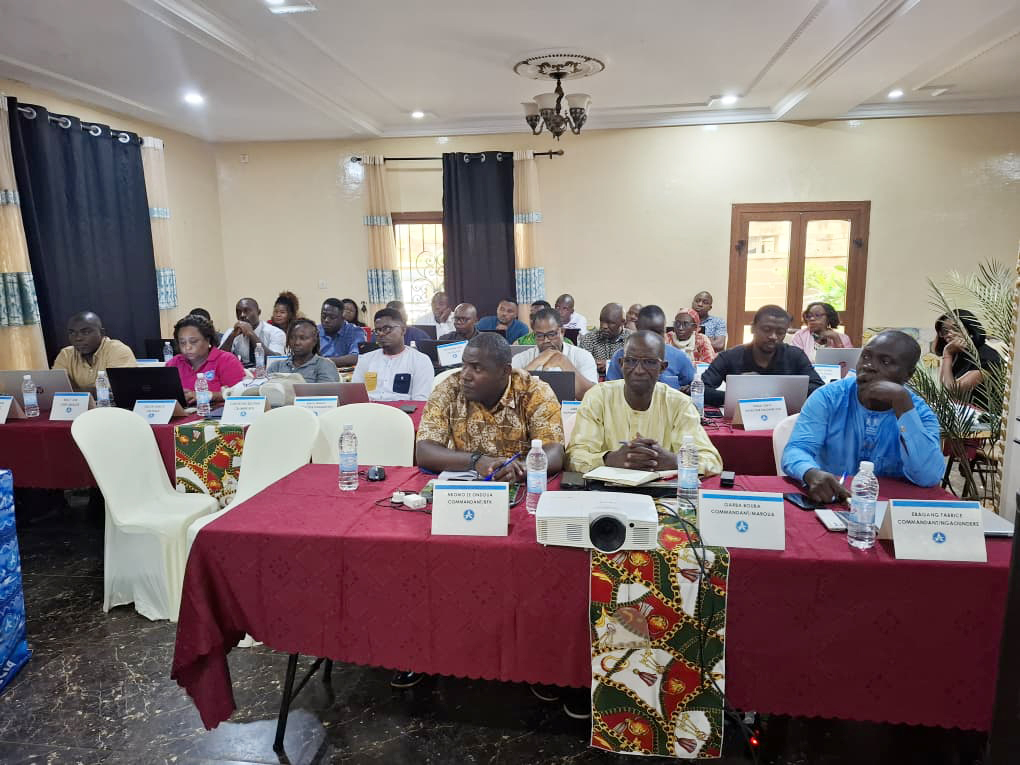
A seminar dedicated to updating and harmonizing the Operating Manuals (MANEX) of the country’s secondary airport platforms was held from 1 to 5 June 2026 in the city of Ngaoundéré. The work aimed to align the infrastructures of Ngaoundéré, Maroua-Salak, Bafoussam, and Bamenda with the most rigorous safety standards.

Led by the Directorate of Airport Operations and Commands (DECA), the seminar actively involved the Airspace Monitoring and Security Crisis Management Unit as well as the Directorate of General Administration. The synergy among participants concretely reflects the strategic orientations of the Director General of the CCAA, whose overriding priority remains aligning the safety of Cameroon’s skies with the highest international standards.

The main innovation of this 2026 edition lies in its methodological approach. It marked a departure from purely theoretical paper-based examinations. In line with the directives of the General Directorate, the validation of documentary compliance was directly tested in the field through practical simulations at Ngaoundéré Airport, under the supervision of Aviation Safety Inspectors. This operational immersion enabled Airport Commanders, air traffic controllers, AIM staff, maintenance technicians, meteorological observers, and aerodrome firefighters to confront the implementation of their procedures on site with national regulatory requirements.

Through this compliance exercise, the CCAA reassures the entire ecosystem. Airlines such as Camair-Co are guaranteed to encounter the same rigour in Ngaoundéré or Maroua as in Yaoundé and Douala. For ground teams, this harmonization strengthens coordination and the sharing of best practices across platforms. The workshop also eliminated technical discrepancies, notably through the meticulous updating of the following five regulatory pillars of the MANEX:


  • Rescue and Firefighting: Work focused on optimizing response times of rescue personnel and ensuring technical compliance of intervention vehicles. The workshop also consolidated the culture of feedback, developed inter-service synergies, and enhanced technical mastery of teams in line with regulatory requirements, particularly regarding daily maintenance of intervention vehicles.
  • Maintenance of Radio-Electric Infrastructure: In aeronautical telecommunications, discussions addressed optimal implementation of operational recording procedures, interface contracts with other units, and methodological divergences in measuring electrical grounds of radio installations. Securing radio communication systems and navigation aids was a key priority to guarantee continuity of air-to-ground links.
  • Air Traffic Management: Efforts centered on strengthening the management of LOAs (Letters of Agreement), streamlining interface contracts, and harmonizing the preservation and archiving of flight progress strips.
  • Aeronautical Meteorology: Measures were taken to reinforce methodologies for estimating meteorological data in case of equipment failure, and to ensure reliable protocols for collecting and transmitting regional meteorological data to the centralization centre in Douala.
  • Aeronautical Information Management: Participants focused on strengthening the monitoring and processing of AIP, NOTAM, SUPP, and AIC publications, implementing interface contracts with other units, and harmonising approaches to triggering emergency plans.


At the end of the five-day seminar, the MANEX for all secondary platforms were finalised and prepared for submission to the Supervisor for approval.

Through this field-based initiative, the CCAA is consolidating its long-term mastery of airport operations in Cameroon.

By: MKG/ARO-PRU
Translation: MKG/ARO-PRU